

Real estate investing while running your own business sounds like the dream combo, right ? You build a company, you build a portfolio, and one day you wake up with passive income flowing while you focus on the next venture. Except that’s not really how it goes. Most entrepreneurs I’ve seen jump into rental property with the same energy they used to launch their startup, and they get burned in ways they never saw coming. Different game, different rules.
So let’s talk straight. If you’re a business owner thinking about putting money into rental real estate, there are a handful of traps that catch nearly everyone, and a few moves that make the whole thing actually work. For the deeper technical side of property investment, financing structures and tax setups, I’d point you to https://www.acoupsur-immobilier.com which goes much further than what we’ll cover here. But the strategic mindset ? That’s what we’re tackling today, and honestly it’s the part most people skip.
Why entrepreneurs often fail at rental property (even smart ones)

 Here’s something that surprised me when I started looking into this seriously. Entrepreneurs are statistically not better real estate investors than salaried professionals. In some cases they do worse. Why ? Because the skills don’t transfer the way you’d think.
Running a business teaches you to move fast, pivot, take calculated risks, optimize for growth. Rental real estate rewards the opposite. It’s slow. It’s boring. It’s about boring math, boring leases, boring maintenance schedules. The entrepreneur in you wants to do something with the property : renovate it, flip it, optimize it, AirBnB-ify it. And often, the best move is to just… leave it alone and collect rent for ten years.
Perso, I’ve watched friends turn a perfectly good 6% yield into a 2% nightmare by trying to “scale” their rental like a SaaS. Don’t do that.
The financing problem nobody warns you about
If you’re a TPE/PME owner or a freelancer, getting a mortgage is harder than for a salaried employee with a permanent contract. Banks love stability and they love payslips. You bring tax returns, balance sheets, and a confused look. They get nervous.
What works in practice :
Show three years of profitable activity. Two minimum. One year ? Forget it, unless you have a massive down payment. Banks want to see that your business isn’t a one-hit wonder.
Keep your debt-to-income ratio under 35%. That’s the unofficial line. Including the new mortgage. If you’re already maxed out on a business loan, the bank won’t touch you.
Don’t pay yourself peanuts. A lot of entrepreneurs minimize their salary to reduce social charges and taxes. Smart move for cash flow, terrible move when you walk into a bank. They look at your declared income, not your company’s retained earnings.
Honestly, the salary thing trips up so many people. You spent three years optimizing your taxes and now the bank thinks you earn 18k a year. Whoops.
Hold it personally or through a company ?
This is the question every entrepreneur asks within ten minutes of considering rental property. SCI, SARL de famille, direct ownership, holding structure… it gets confusing fast.
Quick reality check. For one or two properties, direct personal ownership is usually fine and way simpler. The SCI becomes interesting when you have multiple properties, want to bring family members in, or plan to pass things down later. The SCI à l’IS gets attractive when you want to reinvest profits without paying yourself, but it has a brutal downside : when you sell, the capital gains tax treatment is harsh compared to personal ownership.
I find that too many entrepreneurs set up an SCI on day one because someone told them it was sophisticated. Then they realize they pay 600€ a year in accounting fees for one apartment that generates 4000€. Math doesn’t math.
The cash flow trap
You know what kills more rental investments than bad tenants or market crashes ? Negative cash flow that the owner didn’t plan for.
Here’s the thing. When you run the numbers on a property, you’ll see the rent, the mortgage, maybe the property tax. You’ll calculate a positive cash flow and feel good. Then reality hits :
Vacancy between tenants (count one month per year, easily). Maintenance and repairs (1 to 2% of property value per year). Property management if you don’t want to do it yourself (around 7-8% of rent). Insurance, accountant fees, condo charges, the boiler that dies in February. The tax bill that arrives and you’d forgotten about.
Suddenly your “positive cash flow” property is costing you 200€ a month. Which is fine if you planned for it and you’re playing the long game with capital appreciation and loan amortization. Not fine if you needed that money for your business.
Are you actually running the full numbers, or just the optimistic ones ? Be honest.
Don’t mix your business cash with your real estate adventure
Big one. Really big one. I’ve seen entrepreneurs pull cash out of their company to fund a down payment, and it works fine until the business hits a rough quarter and suddenly you can’t make payroll because your money is locked in a flat in Lyon.
Two simple rules. Your business needs at least 3 to 6 months of operating expenses in reserve before you even think about real estate. And the money you put into property should be money you don’t need for the business. Not optimistic-case money. Worst-case money.
The most common scenario I see : entrepreneur pulls a big dividend, pays the tax, uses the rest as down payment. Painful but clean. The dirty version, where you mix business loans, personal loans, and shareholder current accounts, becomes a nightmare to untangle if anything goes wrong.
Location : stop buying where you live
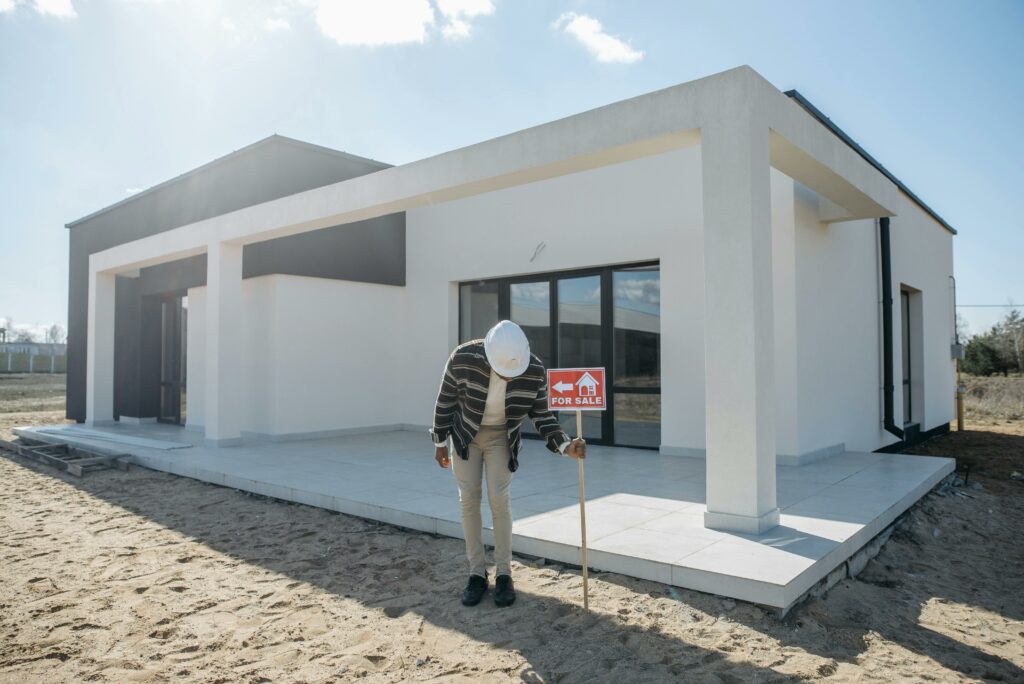 This one’s controversial but I’ll say it anyway. The fact that you live in a city doesn’t make it a good investment city. A lot of entrepreneurs buy in their hometown because it feels safe and they can drive by the property. That’s emotional, not strategic.
What matters : rental yield versus your local market average, demographic trends (is the city actually growing ?), tenant demand for the type of property you’re buying (a 3-bedroom in a student town ? bad fit), and exit potential in 8-10 years.
Some of the best yields right now are in mid-sized cities that nobody talks about at dinner parties. Not Paris. Not Lyon. Not Bordeaux. Places like Saint-Étienne, Mulhouse, Limoges. Yields of 7-9% are still possible, versus 3-4% in the trophy cities.
Of course higher yield often means higher tenant rotation and more management headaches. There’s no free lunch. But pretending the trophy cities are still investment plays in 2026 is wishful thinking.
The tax angle that actually matters
Tax stuff makes most entrepreneurs glaze over but stay with me, because this is where rental investing for entrepreneurs gets interesting.
If you’re already paying yourself a decent salary and you’re in a high marginal tax bracket, classic location nue (unfurnished rental) is going to hurt. The rental income gets piled on top of your other income and taxed at your marginal rate plus 17.2% social contributions. Brutal.
LMNP (Loueur Meublé Non Professionnel) changes the math completely. You get to depreciate the property, deduct charges aggressively, and often pay zero tax on rental income for the first 8-10 years. For a high-earning entrepreneur, this is night and day compared to unfurnished rental.
The catch : it has to be furnished, properly equipped, and you actually have to manage it as such. The administration looks closely at fake LMNP setups now. But for someone with the right profile, it’s genuinely the best legal tax structure available for residential rental in France.
What actually works : the boring strategy
You want to know what most successful entrepreneur-investors do ? They buy one property every 2 or 3 years. They use leverage carefully. They keep their business healthy and separate. They reinvest cash flow into early loan repayment or the next property. They don’t touch it for 15 years.
That’s it. No course required. No mastermind. No “infinite returns” Instagram strategy.
The entrepreneurs who try to build a 20-property empire in 5 years while running a growing company usually end up with a stressed business, a stressed personal life, and a portfolio they can’t actually manage. The slow approach feels frustrating when you’re used to startup pace, but in real estate, slow is the strategy. Boring is the strategy.
So before you sign anything, ask yourself : do you actually want to be a landlord, or do you just want the idea of being one ? Because they’re not the same thing at all. And if the answer is the second one, there are simpler ways to get real estate exposure (SCPI, REITs, crowdfunding) without dealing with the broken washing machine on a Sunday morning.
Either path is fine. Just pick the one that matches what you actually want, not what looks good on LinkedIn.